A Quiet Witness in the Cornfield
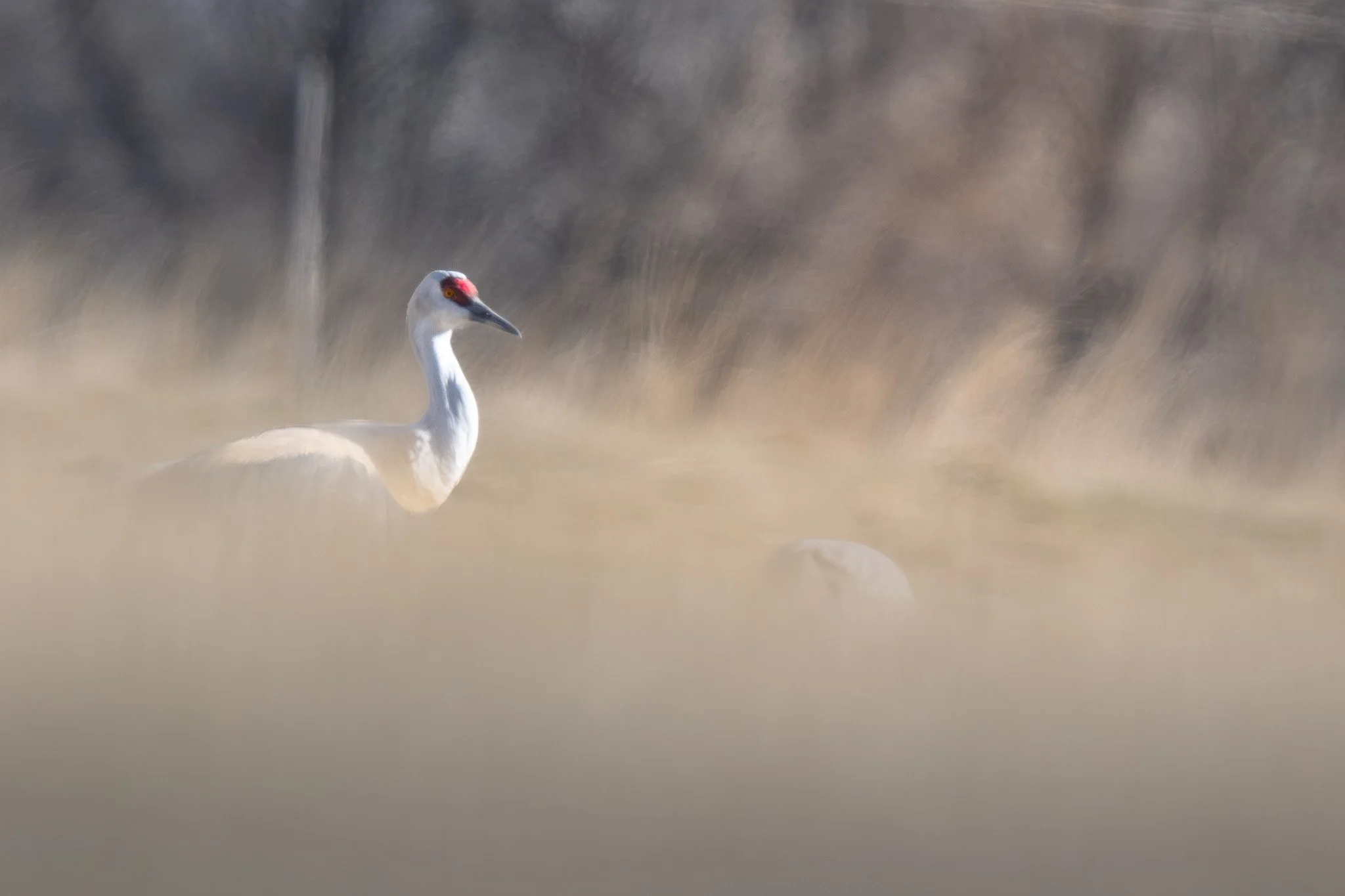
There are moments in wildlife photography when the grand spectacle gives way to something quieter—something more intimate. The sandhill crane migration near Kearney, Nebraska is often described in sweeping terms: hundreds of thousands of birds filling the sky, their calls echoing across the Platte River at sunrise. It is a breathtaking scene, and one that draws people from all over the world.
But this photograph is not about the sky.
It is about what happens after the noise fades.
On this particular morning, I left the riverbanks and followed the cranes to the surrounding farmland, where they spend their days feeding. The energy shifts here. The chaos of flight settles into a slow, deliberate rhythm—heads dipping into the remnants of last season’s corn, feet stepping carefully through the field, always alert, always aware.
Rather than stand above the scene, I chose to lower myself into it.
Lying in the grass at the edge of the field, I let the landscape rise up around me. The foreground softened into a gentle blur, the dry stalks becoming a veil rather than a distraction. Through that veil, one crane came into focus—calm, composed, and undisturbed. My presence, for once, did not alter the moment.
And that is what makes this image meaningful.
We often approach nature as observers from a distance, standing tall, looking out. But there is something transformative about choosing a lower perspective—about meeting creation at eye level, or even below it. It requires patience. It requires stillness. And, perhaps most importantly, it requires a willingness to let the moment come to you.
This crane wasn’t performing. It wasn’t part of a dramatic formation or silhouetted against a painted sky. It was simply living—feeding, moving, existing within the quiet rhythm of its day.
And in that simplicity, there is a kind of beauty we often overlook.
For me, this image serves as a reminder that not every powerful moment announces itself with grandeur. Some of the most meaningful encounters are found when we slow down, lower our vantage point, and pay attention to what is right in front of us.
The migration is extraordinary.
But so is this.
___________________________________________________________________________________________________________________________________________________________________
Monk Reflection:
Sometimes the clearest view comes when we choose to lower ourselves—physically, mentally, and spiritually. In the quiet places, beyond the spectacle, we often find what we were truly looking for all along.